
Ever find an old bag of hard candy laying around and wondered if it is still good to eat? Or maybe there’s some candy that’s close to its expiration date in the clearance section.
Hard candies are surprisingly resilient.
They have a low water and moisture content, making for a long shelf-life. But how long can hard candies sit before going bad?
Most commercial hard candies will have a “best by” shelf life indicated on the package somewhere. Once past that date, it does not necessarily mean that the candy has expired.
Hard candies made at home can last anywhere from 6 to 12 months before degrading in flavor and/or texture.
Does hard candy expire?
Lucky for you, the expiration date on hard candy is not the end-all-be-all date to not consume it. Best-before dates are just guarantees of freshness and flavor.
If anything, hard candies can become grainy or sticky depending on how they were stored.
Candies with milk content tend to spoil faster.
Sugar serves as a great preservative; it is moisture and fat that causes the candy to spoil faster. This is why most hard candies seem to last forever, like the ones inside your grandma’s purse.
So keep in mind, eating older candies (for the most part) is okay; just don’t eat too much! But also trust your gut. If something smells or tastes completely off, toss it out.
Why do hard candies last long?
The basic formula for hard candies begins by boiling sugar, water, and syrup to hard crack temperatures (over 300°F). At that point, pretty much all of the water is boiled out of the candy.
That is why you’re left with only hard candy. Softer, chewy candies are cooked to lower temperatures but retain a higher water content.
Tips for storing and preserving hard candy
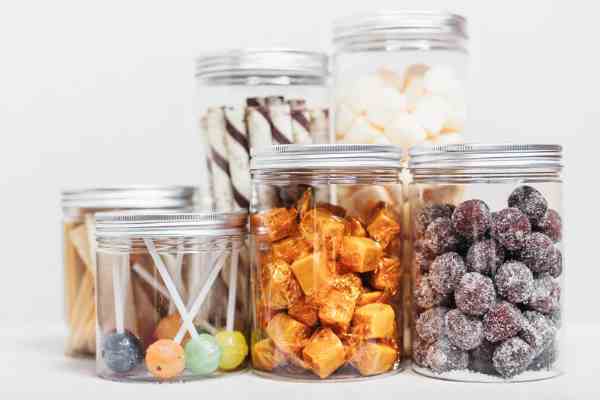
Candies should be stored in a dry, cool, and dark location. Ideally, the candies should also be kept in an airtight container.
A closed kitchen pantry is better than storing candy in the fridge, where the moist environment can cause your candy to become sticky. Even if they are wrapped, the wrappers could get stuck to the candy.
However, the fridge is better than keeping candies in a hot and humid location. If you must store hard candy in the fridge, keep it away from other strong odors.